
Equipment: buy, rent or lease
In one sentence: buy equipment you'll use most working days for years, rent what you use occasionally, and charge every machine to the jobs that use it at a rate that covers what it really costs to own.
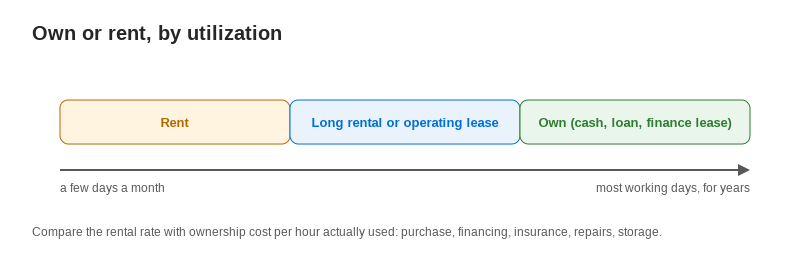
The true cost of owning
- Purchase price and financing cost;
- depreciation (value lost each year);
- insurance, registration, taxes;
- maintenance and repairs;
- storage, transport, downtime.
Divide the yearly total by the hours or days you'll really use it. Compare that rate with the rental rate.
Utilization decides
| Use | Usually |
|---|---|
| Most working days, for years | Own (cash, loan or finance lease) |
| Steady for one long job | Long-term rental or operating lease |
| A few days a month | Rent |
| Specialized, rarely used | Rent with operator, or subcontract |
Charging equipment to jobs
Set an internal rate for each owned machine (hourly or daily) that recovers its ownership and operating cost, and charge it to jobs like labor. Otherwise jobs look more profitable than they are and the equipment cost hides in overhead. See Job costing: knowing what each job really made.
Keeping it working
A simple maintenance schedule and a record per machine (hours, service, repairs) prevent the breakdown that stops a crew. Track where each machine is.
Financing
See Credit lines, equipment loans and leasing.
PM notes
Idle equipment in the yard still costs money every month. Review utilization yearly and sell what you don't use.
Common mistakes
- Buying because of a good deal, not because of utilization.
- Owned equipment never charged to jobs.
- No maintenance record until the machine breaks.