
Credit lines, equipment loans and leasing
In one sentence: match the financing to the need: a revolving line of credit for timing gaps between paying and getting paid, and a loan or lease for equipment that lasts years.
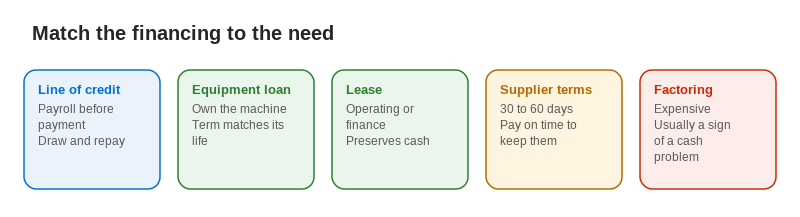
Line of credit
- Draw when payroll comes before payment, repay when the payment arrives.
- Usually secured by receivables and backed by the owners' guarantee.
- Banks look at the same statements as the surety, plus receivable aging.
- A line used and repaid regularly is healthy; a line maxed out for months is a warning sign.
Equipment loans
- You own the equipment; the loan is secured by it.
- Term usually matches the equipment's useful life.
- Works when the machine will be used steadily for years.
Leases
- Operating lease: closer to a long rental; returned at the end.
- Finance (capital) lease: works like a loan; you usually own it at the end.
- Leases can preserve cash and working capital; your CPA can explain how each type shows on your statements, which matters to the surety.
Other sources
- SBA-guaranteed loans through banks.
- Supplier terms (30 to 60 days) are financing too; use them and pay on time.
- Factoring receivables is expensive and usually a sign of a cash problem.
What lenders ask for
Financial statements, tax returns, the WIP schedule, receivable aging, a list of equipment, and personal financial statements from the owners.
See Equipment: buy, rent or lease for deciding whether to own equipment at all.
PM notes
Set up the line of credit when you don't need it. Banks lend to companies that look like they won't need the money.
Common mistakes
- Paying for equipment from the operating account.
- Using a line of credit to cover losses instead of timing gaps.
- Factoring receivables as a routine.