
Getting paid on change orders and closeout
In one sentence: extra work and retention are often the profit on a job, and they get paid when you give notice on time, document as you go and close out completely.
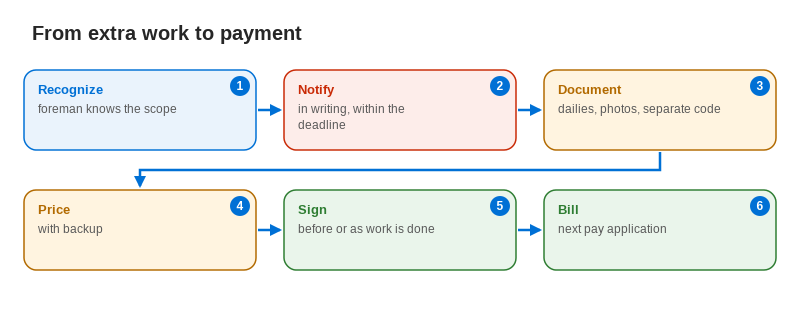
Change orders
- Recognize extra work: the foreman knows the contract scope well enough to spot it.
- Notify in writing within the contract's deadline, before doing the work when possible.
- Document: daily reports, photos, hours and material by a separate cost code.
- Price with backup: labor, burden, material, equipment, subs, overhead and profit as the contract allows.
- Get it signed before or as the work is done; if not, keep tracking costs and follow the contract's claim process.
- Bill approved changes on the next pay application.
See Change orders and potholing findings and Claims and disputes on public contracts.
Closeout
Start closeout before the work ends:
- punch list walked and worked; see Caltrans acceptance testing and the punch list;
- as-builts, O&M manuals, warranties, test reports; see Closeout package checklist;
- final quantities agreed;
- lien or payment releases exchanged with subs and suppliers;
- final billing and retention request.
On public works, retention release follows statute and the agency's acceptance; see Progress payments and retention and Closeout, acceptance and the end of the job.
Tracking
Keep a list of every open change and every job in closeout, with amount, status and next action, and review it every week.
PM notes
An unsigned change order is an unbilled invoice. Treat the change log like accounts receivable.
Common mistakes
- Doing extra work on a verbal instruction without written notice.
- Mixing extra-work costs with base contract cost codes.
- Leaving closeout documents for after the crew has moved on.