
Project management basics for a small company
In one sentence: in a small company the owner, the PM and the foreman share project management, so write down who owns each task and keep a short weekly routine.
Who owns what
| Task | Usually owned by |
|---|---|
| Contract, insurance, bonds | Owner / office |
| Job start meeting, budget, schedule | PM, with the foreman |
| Submittals, RFIs, orders | PM |
| Daily work, crew, safety, daily reports | Foreman |
| Hours and cost codes | Foreman, checked by the PM |
| Change orders and notices | PM, with the foreman's facts |
| Billing | PM and office |
| Closeout | PM, foreman and office |
The job start meeting
Before work starts, the PM and foreman review scope, estimate (hours and quantities by cost code), schedule, long-lead material, risks, safety plan and who the owner's contacts are.
The weekly routine
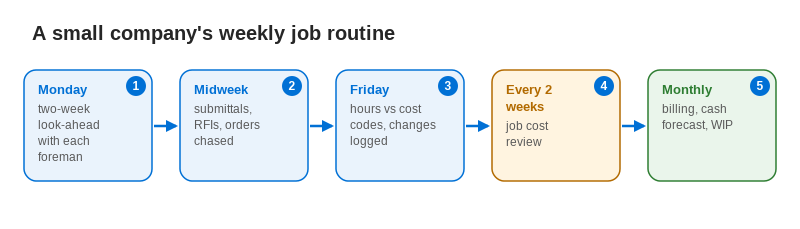
- Monday: two-week look-ahead with each foreman: work, crew, material, equipment, inspections.
- Midweek: submittals, RFIs and orders reviewed; open items chased.
- Friday: hours checked against cost codes; changes and problems logged; next week planned.
- Every two weeks: job cost review. See Job costing: knowing what each job really made.
- Monthly: billing, cash forecast, WIP update.
Tools
A shared job folder, a submittal and RFI log, a change log and a two-week schedule are enough to start. Field apps help once the routine exists. See The day-to-day of a GC project manager.
PM notes
Most job problems are visible two weeks ahead in the look-ahead. The routine's job is to look.
Common mistakes
- No job start meeting, so the foreman never sees the estimate.
- The owner doing everything and the PM waiting for decisions.
- Change orders handled from memory.