
Prequalification and getting on bid lists
In one sentence: many owners and general contractors only invite or accept bidders who prequalified, so keep a ready-to-send package and fill every questionnaire completely and on time.
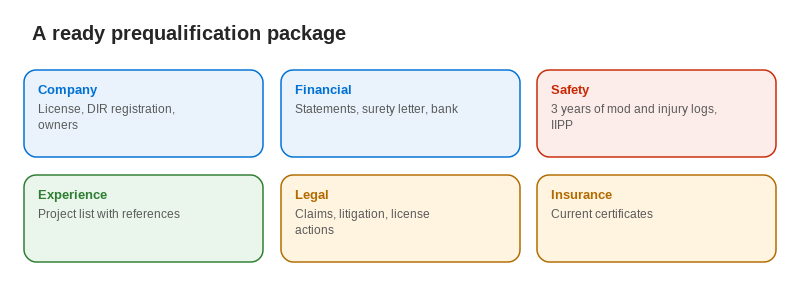
What prequalification asks
- Company: legal name, structure, license numbers and classifications, DIR registration, years in business, owners.
- Financial: statements, bonding capacity letter from your surety, bank reference.
- Safety: experience modification rate for three years, injury logs, IIPP, safety programs, citations. See Safety program as a business system.
- Experience: completed projects with contract values, owners and contacts.
- Legal: claims, litigation, defaults, debarments, license actions.
- Insurance: certificates and limits.
Some public agencies use formal prequalification for certain projects; many GCs use their own questionnaires or third-party systems.
Keep a ready package
One folder, updated every quarter:
- company profile and organization chart;
- license and DIR registration printouts;
- surety letter (current);
- insurance certificates;
- three years of mod rates and injury logs;
- project list with references;
- financial statements (sent only where confidentiality is assured).
Getting on bid lists
- Register on agency vendor and plan room sites for your trade.
- Ask GCs you want to work with how they invite subs, and fill their form.
- Respond to every invitation, even to decline, so you stay on the list.
PM notes
A late or half-filled questionnaire tells a GC how you'll handle submittals. Treat it like one.
Common mistakes
- Waiting for a request to start gathering documents.
- An outdated surety letter or insurance certificate.
- Leaving questions blank instead of explaining.