
What structural inspection is for
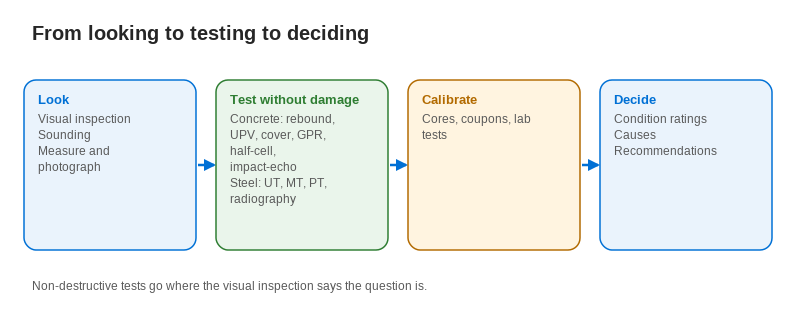
In one sentence: inspection answers three questions about a structure: what condition is it in, why, and what should be done about it, and non-destructive testing (NDT) is how you look beyond the surface without damaging it.
Why structures are inspected
- Safety: find what could fail before it does, and restrict loads or close a structure when needed.
- Maintenance planning: catch deterioration early, when repair is cheaper than replacement.
- Compliance: bridges on public roads are inspected on a federal schedule (see The National Bridge Inspection Standards); many buildings have local or state inspection requirements.
- Decisions about a change of use, an acquisition or a retrofit: know what you are working with before you design.
What an inspector looks for
- Defects: cracking, spalling, corrosion, section loss, deformation, settlement, water where it shouldn't be. See Concrete defects and what they mean and Steel defects: corrosion, fatigue cracks and connections.
- Causes: load, corrosion of reinforcement, freeze-thaw, chemical attack, fatigue, poor construction, movement of the foundations.
- Extent and progression: how much, where, and whether it is getting worse compared with the last inspection.
Where NDT fits
Most inspection is visual and done with simple tools. Non-destructive testing comes in when the question can't be answered from the surface: how deep the cover is, whether the concrete is delaminated, whether the rebar is corroding, how thick the steel still is, whether a weld has a crack inside. See Choosing a test method.
Destructive testing (cores, coupons) is used sparingly, to calibrate NDT results or to measure what NDT can only estimate. See Cores and other destructive checks.
What comes out of it
A report: what was inspected and how, what was found, the condition ratings, the likely causes, and recommendations with priorities. See Writing an inspection report.
Common mistakes
- Running tests before a visual inspection has shown where they are needed.
- Reporting defects without their location and extent, so nobody can compare next time.
- Treating an NDT reading as a measurement of strength without calibration.