
Paying subcontractors and suppliers on time
In one sentence: when the agency pays you, the clock starts on paying your subs: 7 days for progress payments under California law, unless the contract or a written agreement says otherwise.
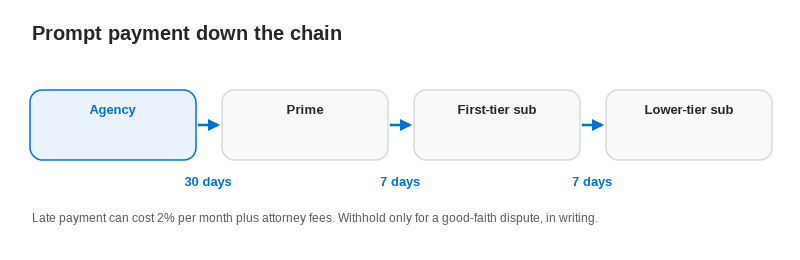
The deadlines
- Progress payments: a prime or sub must pay its subcontractors their share within 7 days of receiving each progress payment, unless otherwise agreed in writing (Business and Professions Code 7108.5 and the public contract equivalents).
- Retention: pay each sub its share within 7 days of receiving retention (Public Contract Code 7107).
- Suppliers: under the terms of your purchase order; federal-aid contracts may set a deadline too.
Withholding
You may withhold from a sub when there's a good-faith dispute, up to an amount related to the dispute. Withholding everything because of a small issue, or because the agency was late on an unrelated item, invites penalties.
Penalties
Late payment can cost 2% per month of the amount due, plus attorney's fees if the sub has to sue, and can be grounds for discipline by the CSLB.
Federal-aid reporting
Federal-aid jobs often require a monthly prompt payment certification listing every sub, at all tiers, and what was paid, even in months with no payment. See DBE requirements on federal-aid jobs.
PM notes
Put the pay date for subs on the calendar the day the agency's payment lands, and keep the bank record. If you withhold, write to the sub the same day with the reason and the amount.
Common mistakes / what agencies actually check
- Holding sub payments until the end of the month for cash flow.
- Withholding the whole payment over a small backcharge.
- Missing a federal-aid monthly certification because no payment was made that month.