
Progress payments and retention
In one sentence: on public works you're paid monthly for work in place, less retention of up to 5%, and the agency must release retention within a set time after completion.
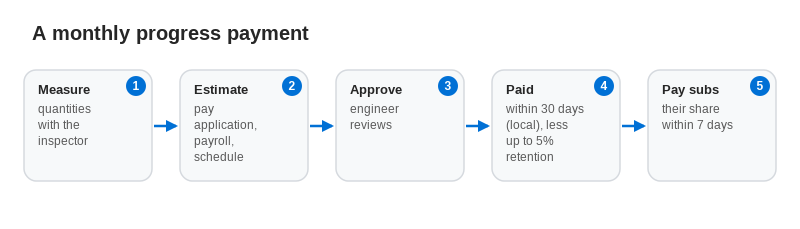
The monthly cycle
- Measure quantities in place with the agency's inspector (unit price) or agree the percentage complete by item (lump sum, often from a schedule of values).
- Progress estimate or pay application for the period, with any required supporting documents: certified payroll, updated schedule, material invoices for stored materials if allowed.
- Agency review and approval by the engineer.
- Payment within the time the contract and law allow. Local agencies must pay an undisputed, properly submitted request within 30 days (Public Contract Code 20104.50), or pay interest. Caltrans pays from monthly progress estimates under the Standard Specifications.
Retention
- Under Public Contract Code 7201, retention on public works may not exceed 5% of each payment or of the contract price, unless the agency makes a finding, before bidding, that the project is substantially complex and states the higher amount in the bid documents.
- The prime can't withhold more from its subs than the agency withholds from it.
- You may usually substitute securities for retention or have it deposited in escrow (Public Contract Code 22300), if the contract allows.
Release of retention
Under Public Contract Code 7107, the agency must release retention within 60 days after completion of the work. It may withhold up to 150% of the value of disputed work. Late release carries interest. When you receive retention, pay each sub its share promptly (within 7 days under current law).
PM notes
Track quantities yourself every week, so the monthly estimate is a comparison, not a negotiation.
Common mistakes / what agencies actually check
- Waiting for the inspector's quantities instead of keeping your own.
- Withholding more retention from subs than the agency holds from you.
- Not asking for retention release when the work is accepted.