
The day-to-day of a GC project manager
In one sentence: the field crew builds the system; the project manager makes sure every piece is approved, ordered, delivered, installed, tested, documented and paid, in the right order.
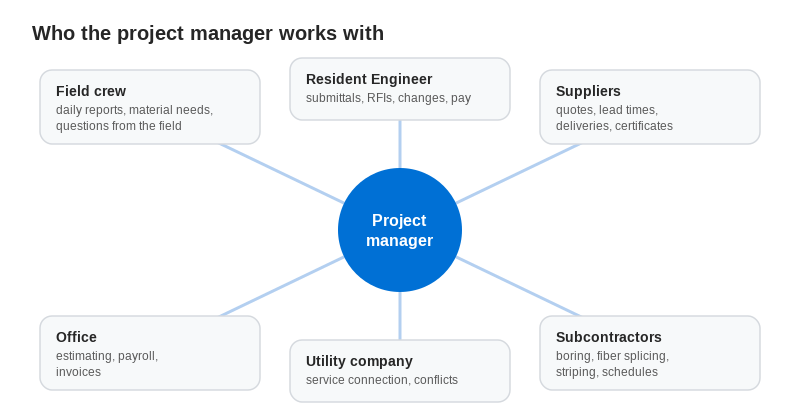
A typical day
- Morning: check the daily reports from the foremen, answer field questions, and look at what material the crew needs this week. See Daily reports and documentation.
- Midday: chase submittals and RFIs with the Resident Engineer, call suppliers about lead times and deliveries. See Submittals: what Caltrans expects and Writing RFIs.
- Afternoon: update the schedule, prepare change order backup, plan the next lane closures, and file paperwork Caltrans needs to pay the job.
What the PM owns
| Area | What it means in practice |
|---|---|
| Contract | Knowing the Special Provisions, plans and bid items better than anyone on the job |
| Submittals | Getting every material and drawing approved before it is ordered or installed |
| Procurement | Quotes, purchase orders, lead times, deliveries. See Procurement and long-lead items |
| Schedule | The baseline CPM schedule and its updates |
| RFIs and changes | Asking the right questions in writing and getting paid for extra work. See Change orders and potholing findings |
| Documentation | Daily reports, certificates, test results, as-builts |
| Closeout | Getting the system accepted and the final package delivered. See Closeout package checklist |
Where the time goes by phase
Early in a job, most time goes to reading the contract, submittals and long-lead orders. In the middle, it is coordination: material arriving on time, the crew working in the right order, field problems turned into RFIs. At the end, it is testing, the punch list and paperwork. The Project lifecycle: the twelve phases of a Caltrans electrical job shows how the phases connect.
The habit that matters most
Write things down. A phone call that changes the work isn't a change until it is in writing. An RFI answered by email is evidence. A daily report that mentions a delay is the start of a claim. Caltrans pays for what is documented.