
Change orders and potholing findings
In one sentence: when the work changes, a Contract Change Order (CCO) changes the contract so you are paid for it.
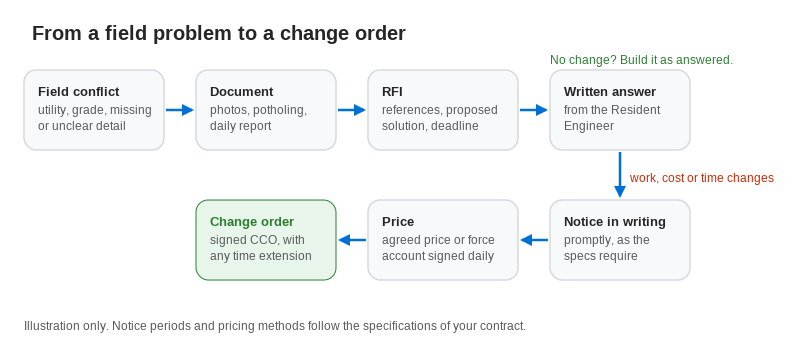
Where changes come from
- Differing conditions: potholing finds a utility where the conduit should go; the ground isn't what was expected.
- Caltrans changes: a device moves, equipment is added, a design changes.
- Document problems: an RFI answer that adds work. See Writing RFIs.
How it works
- Notify in writing promptly when you believe work is extra or changed. The specifications set notice requirements; missing them can cost the right to be paid.
- Document: photos, daily reports, potholing results, RFI and answer.
- Price: agreed lump sum, unit prices, or force account (tracked labor, equipment and materials).
- CCO issued by Caltrans, signed by both sides, with any time extension.
Force account
When the price can't be agreed in advance, the work is paid on actual labor, equipment and materials plus markups. Daily force account records must be signed by the inspector each day.
PM notes
Keep a change log: description, date notified, status, value, time impact. Review it in every weekly meeting with the Resident Engineer.
Common mistakes / what Caltrans actually checks
- Doing extra work on a verbal instruction without written notice.
- Force account records not signed the same day.
- Forgetting to ask for time along with money.