
The bid package: bid items, quantities and the Bid Item List
In one sentence: the bid package is everything you need to price the job: the plans, the Special Provisions, the bid forms and the list of bid items you will be paid on.
What is in it
A Caltrans bid package usually contains:
- Notice to Bidders and Special Provisions: the bid date, working days, liquidated damages, the DBE goal, and the Special Provisions: what they change and why they win.
- Project plans. See Project plans: sheet types, legends and electrical sheets.
- Bid book: the bid forms and certifications, including the Bid Item List.
- Information handout or supplemental information when available: reports and reference material.
- Addenda issued before the bid date. Each one must be acknowledged.
The Caltrans Standard Specifications: structure and how to read them and Standard Plans: the ES (electrical) series are part of the contract by reference; they aren't printed in the package.
Bid items
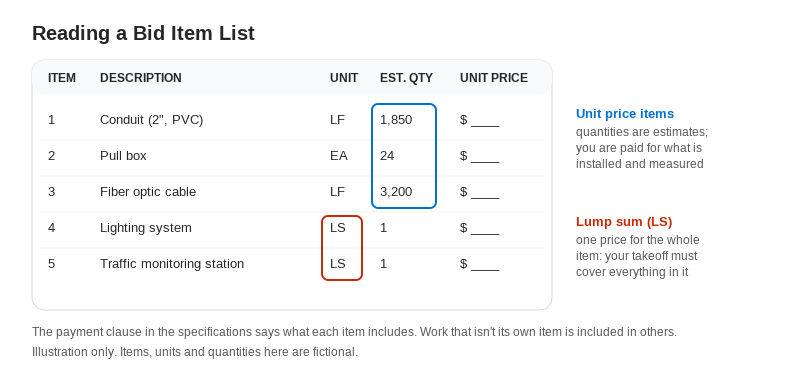
The Bid Item List is the list of things Caltrans pays for, each with an item number, a description, a unit (each, linear foot, lump sum) and an estimated quantity. You enter a unit price for each item.
Two rules matter most:
- Payment follows the contract, not your cost. The payment clause in the specifications says what each item includes. Work that isn't a separate item is included in other items.
- Quantities are estimates for unit-price items. You are paid for the quantity actually installed and measured; lump-sum items are paid as a whole.
On electrical jobs, systems are often paid as lump sum (for example, a signal and lighting system at one location), with some items such as conduit or fiber paid by the foot.
What a PM checks before pricing
- Read Sections 86 and 87 of the Special Provisions for equipment, testing and payment changes.
- Do your own takeoff from the plans and compare it with the Bid Item List.
- Mark long-lead equipment and get supplier quotes early. See Procurement and long-lead items.
- Check working days, lane closure restrictions and night work: they drive labor cost.
- Note anything unclear and ask before the bid date through the bidders' inquiry process.
Common mistakes / what Caltrans actually checks
- Pricing a lump-sum system without a full takeoff behind it.
- Assuming work is paid separately when it is included in another item.
- Missing an addendum.
- Ignoring lane-closure hours when estimating crew production.