
After the bid: results, award and lessons
In one sentence: every bid result, won or lost, tells you something about your prices, so read the bid summary, act quickly if you're low, and feed the lessons into the next estimate.
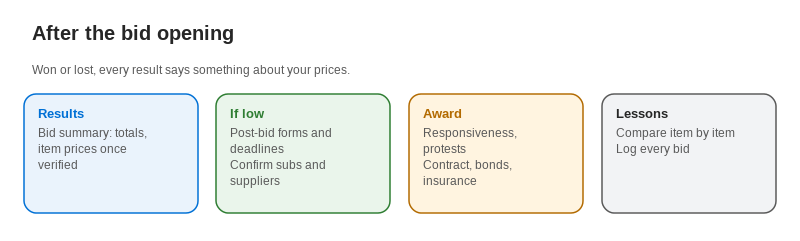
Bid results
Caltrans opens bids publicly and publishes results on its Bid Summary pages, with every bidder's total and, once verified, item prices. Bid openings for electronic bids can be watched online.
If you're the apparent low bidder
- Watch for post-bid requirements and deadlines in the special provisions and bid forms: DBE information, good faith effort documentation, other forms. See DBE requirements on federal-aid jobs.
- Confirm your subs and suppliers right away.
- The low bidder is not the contractor until the award; protests and responsiveness reviews come first. See Bid opening, award and protests.
- After award: contract execution, bonds, insurance. See Payment and performance bonds.
If you're not
Compare item by item with the low bidder and the second bidder:
- Where were you much higher or lower?
- Was it labor, material, a sub, or indirect costs?
- Did someone see a different method or a different reading of scope?
Building your history
Keep a simple log of every bid: project, district, scope, your total, the low total, the spread, your rank, and notes. Over time it shows where you're competitive and which agencies and job types to pursue. See Choosing your market and Finding public bids.
From estimate to budget
When you win, the estimate becomes the job budget: quantities, crew-days and production rates by cost code. Hand it to the PM and foreman at the job start meeting. See Project management basics for a small company.
Official sources
Caltrans Office Engineer: Bidder's Guide.
Common mistakes / what Caltrans actually checks
- Only looking at whether you won, not why.
- Missing a post-bid deadline as the apparent low bidder.
- Not turning the estimate into the job budget.