
Conduit: types, sizes and fittings
In one sentence: conduit is the empty pipe that protects every conductor and fiber on the job, and it is usually the largest quantity you install.
Types
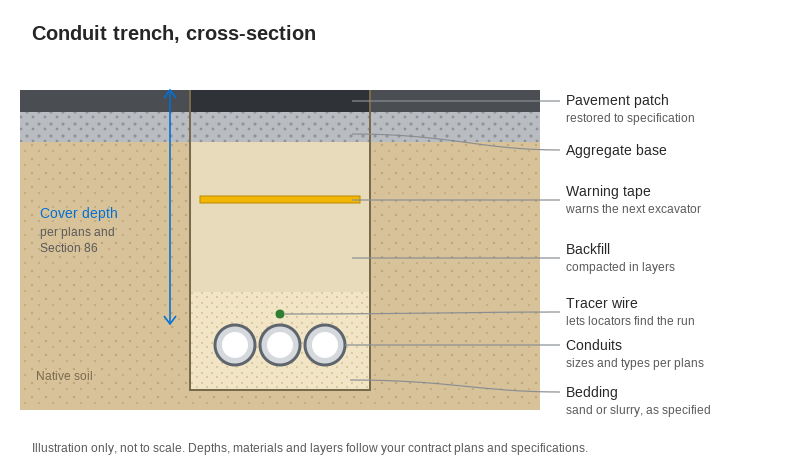
The specifications name the conduit allowed for each use. In general terms:
- Rigid non-metallic (PVC), Schedule 40 or 80: the usual choice underground.
- Rigid steel (galvanized): where more protection is needed, such as exposed runs, structures and some crossings.
- Coated rigid steel and flexible conduit for specific locations, as the specifications and plans allow.
Which type goes where comes from Section 86, the Special Provisions: what they change and why they win and the plans. Sizes are shown on the plans or the conduit schedule.
Materials ordered with it
| Item | What it is for |
|---|---|
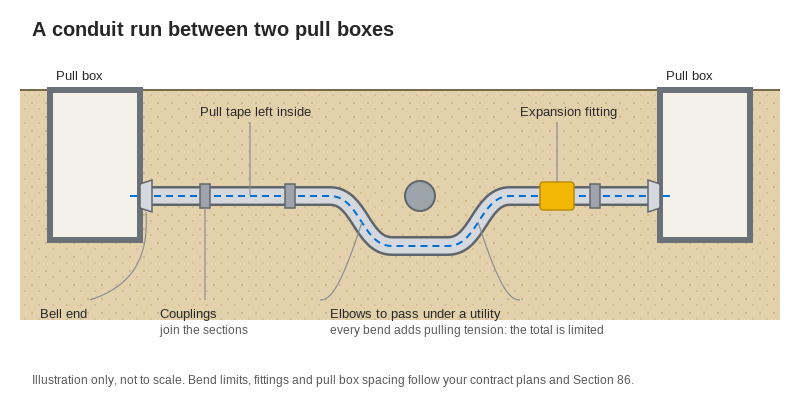
| Elbows (22.5°, 45°, 90°) | Change direction; sweep radius matters for fiber |
| Couplings | Join conduit sections |
| Expansion fittings | Let conduit move with temperature, for example on bridges |
| Bell ends and bushings | Protect cables where conduit enters a box |
| Pull tape (mule tape) | Left in the conduit to pull cable later. See Pull tape, tracer wire and warning tape |
| Innerduct | Subdivides a conduit for fiber |
| Sand bedding, slurry or concrete | Bedding and encasement as specified |
Installation notes
- Depth, slope and bedding follow Section 86 and the plans.
- Keep runs clean: cap open ends during work.
- Prove each run clear (mandrel or swab) before cables are pulled, and when the contract requires it, before it is buried.
- Leave pull tape in every empty conduit.
PM notes
Conduit is often paid by the linear foot by size and type. Keep good daily records of footage installed; final quantities come from them. See Daily reports and documentation.
Common mistakes / what Caltrans actually checks
- Using a conduit type not allowed for that location.
- Too many bends in one run between pull boxes.
- Open conduit ends filling with dirt during construction.
- No pull tape left in spare conduits.