
Standard Plans: the ES (electrical) series
In one sentence: the Standard Plans are Caltrans's book of standard drawings, and the ES sheets are the electrical details your project plans point to instead of drawing them again.
What they are
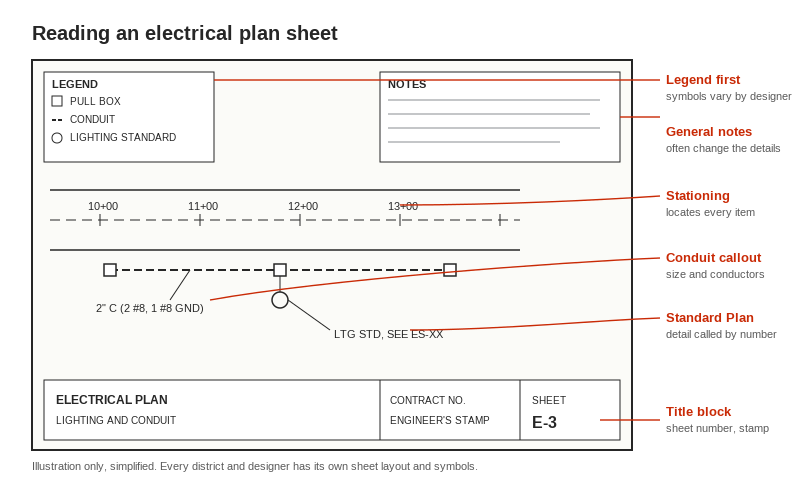
Caltrans publishes a set of Standard Plans alongside the Caltrans Standard Specifications: structure and how to read them. Each sheet shows a standard detail used on many projects. The project plans reference a Standard Plan by its number, and that detail becomes part of the contract.
Standard Plans are grouped by letter prefix by subject. The ES sheets cover electrical systems.
What the ES sheets cover
The ES series typically includes:
- Symbols and abbreviations used on electrical plans.
- Pull boxes: sizes, covers, installation and grounding. See Pull boxes and vaults.
- Conduit installation details. See Conduit: types, sizes and fittings.
- Foundations for signal, lighting and sign poles and for cabinets. See Foundations: cabinet, pole and sign.
- Poles, mast arms and luminaire arms for signals and lighting.
- Signal heads, mountings and detector loops. See Traffic signals and Vehicle detection.
- Service equipment and cabinet details. See Service equipment and utility power and Equipment cabinets.
Sheet numbers and contents change between editions, so look up the exact sheet in the edition your contract names.
Revised Standard Plans
When a Standard Plan sheet changes after the edition was published, Caltrans issues a Revised Standard Plan (RSP). RSPs that apply are included with the contract, and they govern over the original sheet. See Order of precedence: which contract document wins.
How a PM uses them
- During takeoff: a single symbol on the plans may stand for a whole Standard Plan detail (the box, the cover, the grounding, the extension). Price the detail, not just the symbol.
- For submittals: standard details still need the materials submitted that meet them.
- In the field: give the crew the Standard Plan sheet with the project plan sheet. Many field questions are answered on the ES sheet.
If the project plans show something different from the Standard Plan they reference, the project plans govern.
Common mistakes / what Caltrans actually checks
- Using the Standard Plans of a different edition than the contract names.
- Missing a Revised Standard Plan included with the contract.
- Pricing the symbol on the plan and not the full standard detail behind it.