
Solar power and LiFePO4 batteries
In one sentence: where there is no practical utility service, solar panels charge batteries that run the site day and night.
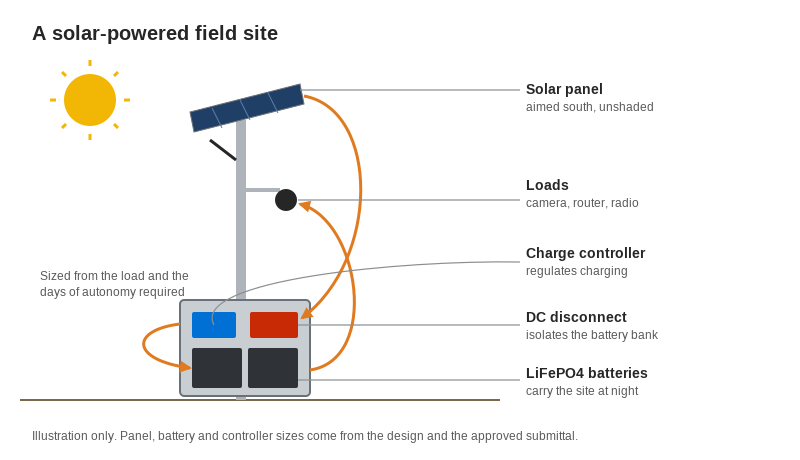
Main parts
| Item | What it is for |
|---|---|
| Solar panels | Generate electricity |
| Panel mounts | Support and tilt the panels on the pole or structure |
| Charge controller | Regulates battery charging and protects the batteries |
| Batteries (often LiFePO4) | Store energy for night and cloudy days |
| Battery enclosure and trays | Hold and protect the batteries |
| Battery cables and DC disconnect | Connect the bank; let crews isolate it safely |
Sizing
The design sets panel and battery capacity from the load (camera, radio, router) and the days of autonomy required. Don't substitute smaller equipment.
Batteries
Lithium iron phosphate (LiFePO4) batteries are common for their life and safety, and some contracts require them. They are long-lead items with shipping rules for lithium batteries. See Procurement and long-lead items.
Testing
Caltrans may check charging, battery voltage, and that the site runs on battery alone. See Phase 9: System testing.
Common mistakes / what Caltrans actually checks
- Panels facing the wrong direction or shaded.
- Battery chemistry or capacity different from the approved submittal.
- No DC disconnect for maintenance.