
Equipment, traffic control and indirect costs
In one sentence: the costs that aren't installed work (equipment, traffic control, mobilization, supervision, bonds and insurance) often decide whether a freeway electrical job makes money, so price them from the schedule, not as a percentage.
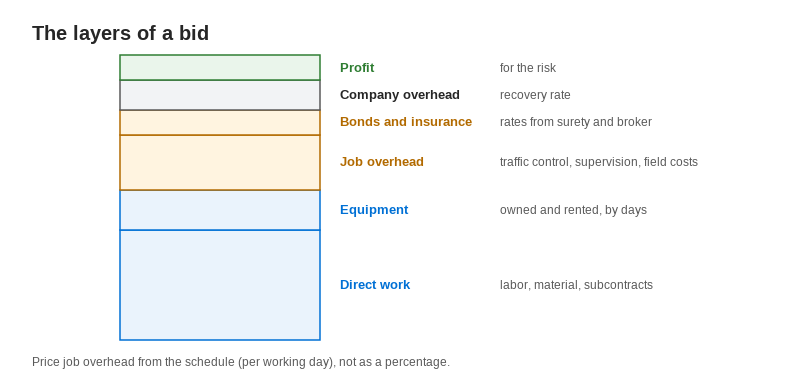
Equipment
- List the equipment each crew needs (trencher, backhoe, bore rig, bucket truck, crane, compressor, generator) and how many days.
- Owned equipment at your internal rate; rented equipment at quote plus delivery. See Equipment: buy, rent or lease.
- Price by days on the job, including idle days between closures.
Traffic control
On freeway electrical work, traffic control is often a major cost:
- check whether it's a separate bid item or included in others;
- count closures by type (shoulder, lane, ramp, full) and number of nights;
- get a quote from a traffic control sub, or price your own crew and equipment;
- include changeable message signs or flaggers where required.
Mobilization and field overhead
- Mobilization: moving equipment and setting up; check the Bid Item List for a mobilization item and its limits.
- Field overhead: superintendent, project trucks, yard or storage, temporary facilities, testing, surveying, safety, cleanup.
- Price field overhead per working day or per month of the schedule.
Schedule and working days
The contract sets the working days. A schedule drives field overhead and equipment cost, so build at least a rough one: closures available per week, crews, sequence. Know the liquidated damages per day.
Bonds, insurance, company overhead and profit
- Bid, performance and payment bonds: rate from your surety. See Bid security: bid bonds and other forms and Payment and performance bonds.
- Insurance not already in labor burden.
- Company overhead recovery and profit. See Overhead and markup: pricing so the company earns money.
PM notes
Indirect costs are where low bids lose money. Compare your total indirects with past jobs of similar length.
Common mistakes / what Caltrans actually checks
- Field overhead as a percentage instead of per day of schedule.
- Traffic control priced as if every night had a full closure window.
- Forgetting idle equipment days between closures.