
Pull boxes and vaults
In one sentence: a pull box is the buried box with a lid where crews pull, splice and later service the cables.
What they are for
Pull boxes break long conduit runs into lengths that can be pulled, give access at devices, poles and cabinets, and hold slack and splices. Larger vaults hold fiber splice closures and many conduits.
Types and sizes
Caltrans pull boxes come in standard numbered sizes, with covers and details shown on the ES Standard Plans. See Standard Plans: the ES (electrical) series. The project plans show which size goes where. Communication and fiber pull boxes may be larger or specified in the Special Provisions: what they change and why they win.
| Item | What it is for |
|---|---|
| Concrete or polymer concrete box | The body; polymer concrete is lighter and corrosion resistant |
| Cover (lid) | Secures the opening; marking shows the system (for example, electrical or communications) |
| Extension | Adds depth where needed |
| Ground rod and bonding | Grounds metal covers and equipment as detailed. See Grounding and bonding |
| Drain rock | Lets water drain under the box |
Installation notes
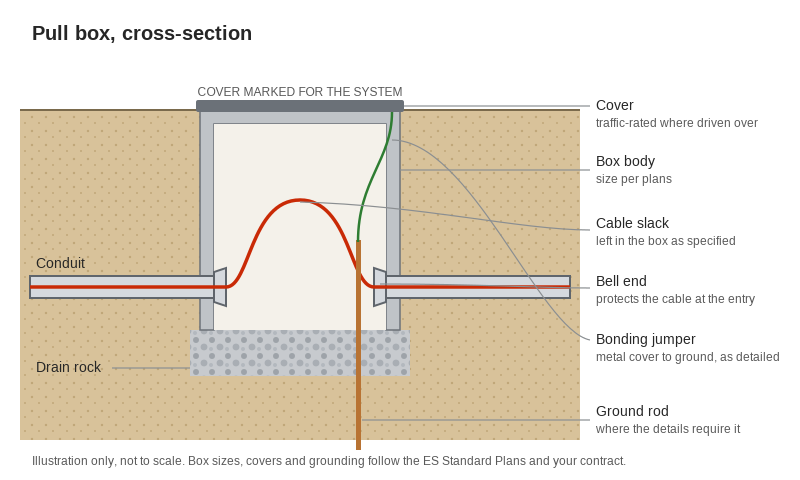
- Set to grade, on drain rock, with conduit entering as detailed.
- Use traffic-rated boxes and covers where vehicles can drive over them.
- Keep boxes clear of dirt; clean them before pulling cable and before acceptance.
PM notes
Pull boxes are often among the first materials needed. Order them with the conduit, and check the plan count against the bid item list.
Common mistakes / what Caltrans actually checks
- A non-traffic box set where vehicles drive.
- Boxes full of dirt at acceptance.
- Wrong cover marking for the system.
- Metal covers not bonded as detailed.