
Daily reports and documentation
In one sentence: the daily report is the job's diary: it proves what was done, with whom, and what got in the way.
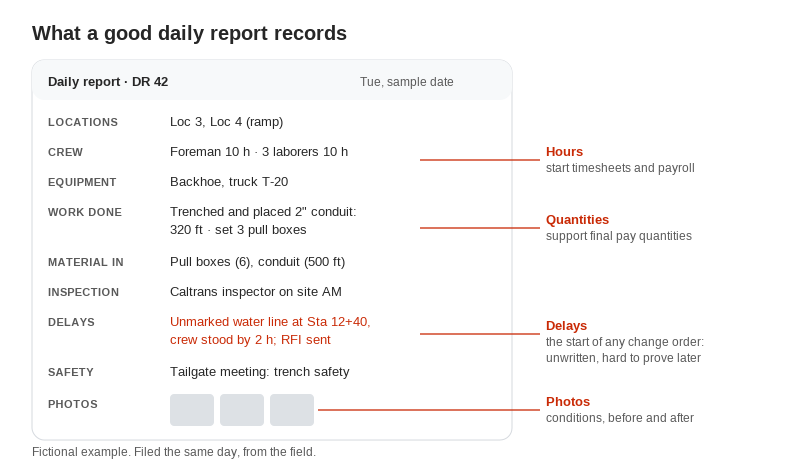
What to record each day
- Date, contract and locations worked.
- Crew: names, classifications and hours.
- Equipment used.
- Work performed and quantities installed (feet of conduit, boxes set, foundations poured).
- Materials received.
- Subcontractors on site.
- Inspections and who from Caltrans was present.
- Delays and problems: weather, utility conflicts, waiting on answers, lane closure cancellations.
- Safety meeting held and topics.
- Photos.
Why it matters
- Payment: quantities in daily reports support final quantities.
- Change orders and claims: a delay that isn't in the daily report is very hard to prove later. See Change orders and potholing findings.
- Timesheets and certified payroll follow from the labor recorded.
PM notes
Make it easy for foremen to file the same day, from the field, with photos. Review them daily and follow up on anything that sounds like a change.
Common mistakes / what Caltrans actually checks
- Reports filed days later from memory.
- Delays mentioned verbally but never written down.
- Quantities missing, so final pay quantities are disputed.