
Writing RFIs
In one sentence: an RFI is a written question to the engineer when the contract is unclear, contradictory, or doesn't match the field.
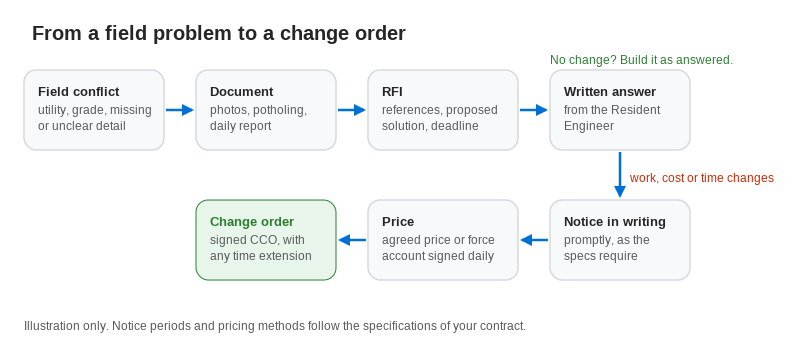
When to write one
- Two documents disagree and the Order of precedence: which contract document wins doesn't settle it.
- A requirement is unclear or missing.
- The field doesn't match the plans: a utility in the way, a grade that doesn't work, an existing facility not shown.
What a good RFI contains
- A clear subject: location and topic, for example "Pull box at Sta 12+50: conflict with storm drain".
- References: sheet numbers, specification sections, photos.
- The problem, stated in one or two sentences.
- A proposed solution. It speeds the answer and shows you've thought about it.
- The impact: what is on hold, and by when you need an answer.
One question per RFI. Number them and keep a log: number, date sent, subject, date answered, answer, and whether it affects cost or time.
After the answer
If the answer changes the work, cost or time, it may lead to a change order. Say so in writing quickly. See Change orders and potholing findings.
PM notes
Send RFIs early. One sent in phase 1 costs a day; one found in the field costs a crew.
Common mistakes / what Caltrans actually checks
- Several questions in one RFI, so the answer covers only some.
- No proposed solution.
- Starting the work before the answer, then not being paid for it.