
Traffic signals
In one sentence: a traffic signal is a controller in a cabinet that switches signal heads in a timed sequence, adjusted by what the detectors see.
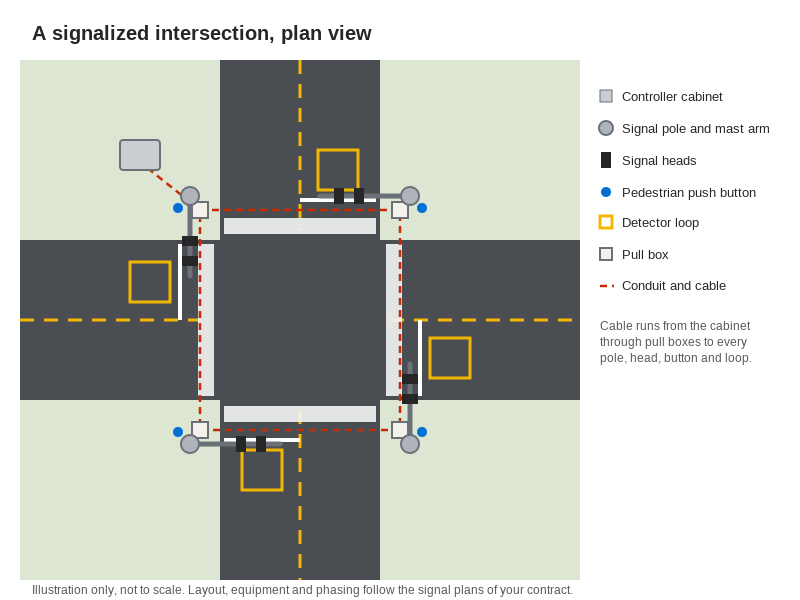
Main parts
| Part | What it does |
|---|---|
| Controller and cabinet | Runs the timing; Caltrans uses standard controller and cabinet models named in the contract. See Equipment cabinets |
| Signal standards and mast arms | Hold the heads over and beside the road. See Foundations: cabinet, pole and sign |
| Signal heads | Vehicle and pedestrian indications, usually LED |
| Pedestrian push buttons | Call a pedestrian phase; accessible push buttons where required |
| Detection | Tells the controller where vehicles are. See Vehicle detection |
| Emergency vehicle preemption | Gives emergency vehicles a green, when specified |
| Battery backup | Keeps the signal running in a power outage. See Battery backup systems |
| Signal and interconnect cable | From cabinet to heads, and to other signals or the TMC |
Details are on the ES Standard Plans: the ES (electrical) series and the signal sheets of the plans.
How it is built
Conduit and pull boxes, foundations, standards and cabinet, cable, heads and buttons, then cabinet wiring and the turn-on.
Turn-on
A new or modified signal is turned on in a planned sequence agreed with Caltrans: timing loaded, heads checked, often with temporary traffic control and Caltrans staff present.
PM notes
- Signal work at an existing intersection is often staged to keep the signal running. Plan temporary signals or staging.
- Order the controller cabinet early; it may need factory testing.
Common mistakes / what Caltrans actually checks
- Turning on without the agreed timing loaded.
- Heads aimed wrong.
- Push buttons not meeting accessibility requirements.